Dark Knees and Elbows: Why They Happen and the Natural Routine That Fades Them

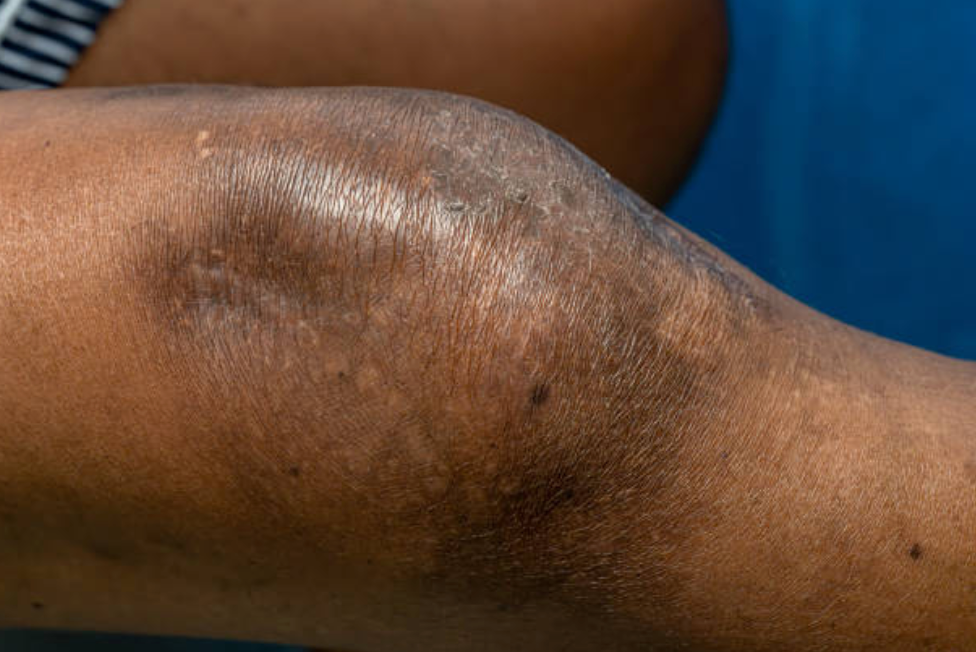
Dark knees and elbows are one of those things that nobody really talks about out loud, but almost everyone with darker skin has wondered about at some point. You are wearing a dress and you notice your knees look several shades darker than the rest of your legs. You reach for something and catch your elbow in the mirror and it looks grey, rough, almost ashy no matter how much you moisturise. It is not dangerous, it is not a medical problem, but it bothers you, and every product you have tried either does nothing or makes you too nervous about what is actually in it.
The good news is that dark knees and elbows are one of the most treatable body skin concerns when you understand what is actually causing them. The approach is straightforward: exfoliate the right way, moisturise with the right ingredients, do it consistently. No harsh bleaching agents, no acid peels, no expensive salon treatments. Two products, a clear routine, and enough consistency to let the skin's own renewal cycle do the work.
Here is the full explanation of what is happening and exactly what to do about it.
Why Dark Knees and Elbows Happen — The Three Causes

Most people assume dark knees and elbows are simply a moisturisation problem and treat it by applying more body lotion. This rarely works because dryness is only one part of the picture. There are three distinct mechanisms at play, and a routine that addresses all three is what actually produces results.
Friction and Mechanical Trauma

The skin over the knees and elbows is designed to withstand more physical pressure and movement than almost any other area of the body. It is thicker, more structured, and regularly subjected to the friction of bending, kneeling, leaning, and contact with surfaces.
Every time you kneel on a hard floor, rest your elbows on a table, or wear tight clothing that rubs against these joints, the skin responds by producing more melanin as a protective mechanism. Melanin is the pigment that gives skin its colour, and its production is triggered by anything the skin perceives as a threat, including physical friction. Over time, repeated friction produces a visible darkening that accumulates in layers.
Post-Inflammatory Hyperpigmentation (PIH)

Every scratch, bump, or bout of irritation at the knee or elbow triggers an inflammatory response. On melanin-rich skin, Black and Brown skin, this inflammation activates the melanocytes (pigment-producing cells) to produce excess melanin as part of the healing process.
This is post-inflammatory hyperpigmentation, and it is the same mechanism that produces dark marks after spots and eczema flares. Because knees and elbows are constantly subject to minor physical stress, PIH builds up continuously in these areas. The darker the skin tone, the more pronounced the melanin response to inflammation, which is why darker-skinned people experience this most visibly.
Dead Cell Accumulation on Thick Skin

The skin over the knees and elbows is significantly thicker than on the rest of the body. This thickness, an adaptation for protection, also means the natural skin cell turnover process happens more slowly in these areas.
Dead cells accumulate on the surface faster than they shed. This build-up creates the grey, rough, ashen appearance that makes knees and elbows look darker than they actually are. The layer of dead cells on the surface does not reflect light the way fresh skin does. It also blocks any moisturiser you apply from reaching the living skin beneath, which is why regular moisturising without exfoliation produces minimal visible improvement.
Understanding all three causes explains why the solution requires both exfoliation and targeted moisturisation. Exfoliation removes the accumulated dead cells and allows new pigment-producing stimuli to process and clear. Targeted moisturisation delivers the specific compounds that actively address the melanin overproduction and barrier damage driving the darkening. Neither step works effectively without the other.
“Dark knees and elbows are not a cosmetic flaw. They are your skin responding faithfully to friction, inflammation, and thick-skin biology. Treating them means working with those mechanisms, not against them.”
Why Melanin-Rich Skin Shows This More Prominently

Dark knees and elbows occur in all skin types, but they are significantly more visible and more persistent in Black and Brown skin for a specific and well-understood reason.
Melanin-rich skin contains more active melanocytes, the cells that produce melanin, than lighter skin. This greater melanocyte activity is part of what gives darker skin its natural UV protection and is associated with slower visible ageing in many research studies.
But it also means that any inflammatory or frictional stimulus produces a stronger melanin response. The same friction that would barely mark lighter skin produces noticeable darkening on darker skin. The same minor scrape that would fade quickly on a lighter skin tone leaves a persistent dark patch on melanin-rich skin.
There is also the matter of contrast. Because the surrounding skin is already pigment-rich, the additional darkening at joints is more visible against the baseline tone than it would be on lighter skin where the tonal range is narrower.
This is not a deficiency in darker skin. It is the same system that protects it from UV damage, responding to physical stress the way it was designed to. But it means that the approach to fading dark knees and elbows needs to account specifically for how melanin-rich skin produces and retains pigment.
This is why the two products in the Zawadi Naturals routine for this concern, the Pineapple Sugar Scrub and Pink Prestige Whipped Body Butter, are built around ingredients that address melanin overproduction directly, not just surface dryness.
Why Most Body Lotions and Home Remedies Do Not Work

Before the routine, it is worth understanding why the approaches most people try first do not produce meaningful results.
Standard body lotion on un-exfoliated skin. The thick dead cell layer on dark knees and elbows acts as a physical barrier between the moisturiser and the living skin beneath. Applying lotion to an un-exfoliated knee is like painting over a dusty wall. The paint sits on the dust, not on the surface you are trying to treat. This is the primary reason people feel they have been moisturising consistently and seeing no improvement.
Lemon juice and baking soda. These are among the most-searched home remedies for dark knees and elbows, and both can cause more harm than benefit. Lemon juice is highly acidic and can cause chemical burns, severe sensitivity, and particularly on darker skin can worsen hyperpigmentation rather than fade it if the skin is then exposed to UV light. Baking soda disrupts the skin's pH and can damage the barrier, triggering inflammation that produces more PIH. Both are unpredictable, difficult to control, and not recommended.
Bleaching creams and hydroquinone products. These products work by inhibiting melanin production and they can produce results. But hydroquinone is not without controversy. It is banned in cosmetics by the European Union (though not by the UK post-Brexit), and high-concentration or prolonged use has been associated with ochronosis — a paradoxical darkening of the skin in some users. The natural approach described in this post targets the same mechanisms without any of these risks.
Physical scrubbing with abrasive tools. Pumice stones, harsh loofahs, and physical scrubs applied aggressively to dark knees or elbows can produce temporary surface smoothing but regularly cause micro-inflammation, which, on melanin-rich skin, triggers more melanin production. The skin responds to aggression with more pigment. Gentle exfoliation with an enzyme-based approach is significantly more effective and does not trigger this cycle.
Remedy from Zawadi Naturals That Works: The Radiance Trial Treasures

What's Inside the Radiance Trial Treasures?
The Radiance Trial Treasures includes:
- SKINSTAR Oatmeal + Sea Moss + African Honey Soap
- Plantain Miracle Salve
- Pink Prestige Whipped Body Butter
- Tikiti Luxe Facial Oil
For dark knees and elbows, the stars of the routine are Plantain Miracle Salve and Pink Prestige Whipped Body Butter.
Begin by cleansing with the SKINSTAR Soap. Then use Plantain Miracle Salve to help lift away dull, built-up skin, followed by Pink Prestige to deeply nourish and support softer, smoother-looking skin.
After cleansing with SKINSTAR Soap, follow these simple steps to get the most from your routine.
Step One: Plantain Miracle Salve — Gentle Exfoliation That Actually Works

Effective exfoliation for dark knees and elbows has to do two things simultaneously: remove the accumulated dead cell layer that creates the ashen appearance and blocks moisturiser absorption, and address the hyperpigmentation compounds accumulating in the surface layers of the skin. Most exfoliants only do the first.
The Zawadi Naturals Pineapple Sugar Scrub with Turmeric and Camwood does both. Here is what each ingredient is doing and why the combination matters specifically for dark knees and elbows.
Pineapple bromelain — the enzyme exfoliant. Bromelain is a proteolytic enzyme extracted from pineapple. Unlike physical exfoliants that abrade the skin surface, bromelain dissolves the protein bonds holding dead skin cells together, allowing them to be rinsed away without the friction and micro-inflammation that physical scrubbing causes. This is particularly important for melanin-rich skin where that micro-inflammation would trigger more melanin production. The dead cell layer comes away cleanly and without aggravating the skin underneath.
Organic Rapadura sugar granules — gentle mechanical support. The fine sugar granules provide gentle manual exfoliation that works with the bromelain enzyme, helping to physically lift and remove the dead cell debris that the enzyme has loosened. Rapadura sugar is less refined than standard white sugar, retaining natural molasses content that provides additional humectant hydration as you scrub. The granule size is fine enough to be gentle on the sensitive skin over joints without the aggressive abrasion of coarser physical scrubs.
Turmeric — the brightening active. Turmeric's active compound curcumin has documented tyrosinase-inhibiting activity; it suppresses the enzyme responsible for melanin synthesis, directly addressing the melanin overproduction that creates dark patches. Research has also shown that curcumin reduces the inflammatory cytokines that trigger PIH, attacking the problem at its source rather than just on the surface. Turmeric has been used for centuries in South Asian and African beauty traditions specifically for skin brightening and science is now confirming the mechanism behind those traditional uses. The yellow pigment in turmeric naturally washes off with the scrub; it does not stain the skin at the concentrations used in the formula.
Camwood (African Red Sandalwood) — the Yoruba secret. Camwood, known as Osun in Yoruba tradition, has been used in West African beauty rituals for centuries for its deep cleansing and skin-renewing properties. Its active compounds purify the skin surface, unclog the pores that friction and dead cell build-up block, and have anti-inflammatory properties that reduce the redness and irritation that accompany PIH. Camwood is one of the African botanical ingredients that remains almost entirely unknown in mainstream UK skincare, and yet it is one of the most targeted and effective ingredients for hyperpigmentation on darker skin. One customer described the Pineapple Sugar Scrub as leaving skin soft and subtle, which is precisely what the camwood and bromelain combination achieves.
Lemongrass — anti-microbial and astringent. The final active in the formula, lemongrass, provides anti-microbial protection for the freshly exfoliated skin surface and a gentle astringent action that tightens the skin texture, complementing the exfoliation and setting up the skin to receive the moisturiser that follows.
How to use: apply the Pineapple Sugar Scrub to damp skin on the knees and elbows in the shower or bath. Massage using small circular motions for one to two minutes per area — gentle pressure, not aggressive scrubbing. Leave on for thirty seconds to allow the bromelain enzyme to complete its work, then rinse thoroughly. Pat dry. Apply Pink Prestige immediately, while the skin is still slightly damp.
Frequency: once or twice a week to begin with, moving to once a week for maintenance once you have reached your target. Daily exfoliation would be excessive and counterproductive — the goal is to keep the dead cell layer cleared, not to constantly strip the skin.
Step Two: Pink Prestige Whipped Body Butter — The Targeted Moisturiser

The Pineapple Sugar Scrub removes the barrier. Pink Prestige Whipped Body Butter delivers what the freshly exfoliated skin needs directly to the living skin beneath. This is the step that addresses the melanin overproduction and barrier damage driving the darkening, not just the surface symptoms.
Unrefined Organic Shea Butter — Vitamins A and E
Vitamin A encourages healthy skin renewal, helping the skin gradually shed older, pigment-heavy cells and replace them with fresher, more evenly toned skin.
Vitamin E helps protect against oxidative stress, one of the triggers for excess melanin production. Together, these nutrients support smoother, softer, and more balanced-looking skin.
Marula Oil — Rapid-Absorbing Antioxidant Support
Marula oil absorbs quickly into the skin and helps reinforce the skin barrier without leaving a heavy or greasy finish.
Its antioxidant profile supports the skin's natural repair processes and helps defend against environmental stressors that can contribute to uneven tone.
One customer who began using Pink Prestige on her feet and heels reported that they looked healthier and no longer appeared dry, cracked, or ashy. The same principle applies to knees and elbows where thickened, dry skin is common.
Illipe Butter — Seals and Protects
Illipe butter helps lock moisture into the skin and creates a protective barrier against the friction and environmental exposure that contribute to recurring darkening.
This protective layer helps preserve the improvements achieved through consistent exfoliation and moisturisation.
How to Use Pink Prestige
Apply Pink Prestige to slightly damp skin immediately after showering — ideally within two to three minutes of stepping out.
On days when you use Plantain Miracle Salve, apply Pink Prestige immediately afterwards.
On non-treatment days, continue applying Pink Prestige after every shower. Consistency matters more than quantity.
The treatment days help accelerate results. The daily damp-skin application is what maintains them.
The Complete Routine — Week by Week

Week One and Two — Establish the Pattern
Use Plantain Miracle Salve regularly and apply Pink Prestige to damp skin after every shower.
Do not skip the post-shower application on non-treatment days. A significant amount of the skin barrier repair and moisturisation happens during this stage.
Focus on treating the entire knee and elbow area rather than only the darkest patch.
Week Three and Four — The First Visible Changes
Most people notice improvements in texture before colour.
The knees and elbows begin to feel softer and smoother as accumulated dead skin cells are gradually removed.
The grey, ashy appearance starts to diminish and some brightening may become visible.
Week Five to Eight — Tone Begins to Improve
By the second month of consistent use, the colour difference between the knees, elbows, and surrounding skin often becomes noticeably reduced.
This is when the effects of regular skin renewal and daily nourishment begin to compound.
Older, pigment-heavy cells are being replaced more efficiently and the overall appearance of the area becomes more even.
Month Three Onwards — Maintenance
Continue with regular use of Plantain Miracle Salve and daily application of Pink Prestige to damp skin.
At this stage, the focus shifts from correction to maintenance.
Keeping the skin moisturised and preventing dead skin build-up helps maintain results over the long term.
Preventing Recurrence — The Habits That Matter

Protect your knees from hard floor contact. If you kneel regularly, use a cushion, prayer mat, or kneeling pad where possible.
Moisturise before activities that create friction. Applying Pink Prestige beforehand can help reduce friction against the skin.
Wear protective clothing when appropriate. Long sleeves and leggings help reduce repeated contact with rough surfaces.
Apply SPF when knees and elbows are exposed. UV exposure can worsen existing hyperpigmentation and slow fading.
Stay consistent with damp-skin application. The most effective long-term habit is applying Pink Prestige to damp skin after every shower.
“Fading dark knees and elbows is not a one-month project. It is a consistent habit. The skin that got darker gradually gets lighter gradually — and stays lighter when you keep going.”
Frequently Asked Questions
Q: How long does it take to lighten dark knees and elbows naturally?
A: Most people notice smoother texture within two to four weeks and visible tone improvement within six to eight weeks. Significant brightening often takes two to three months of consistent care because skin renewal happens gradually. The darker and thicker the skin build-up, the longer the process takes.
Q: Can I use this routine every day?
A: Pink Prestige Whipped Body Butter should be applied daily to damp skin after showering. Plantain Miracle Salve can be used regularly as directed to support gentle exfoliation and skin renewal. Consistency is more important than intensity.
Q: Will this work on knuckles too?
A: Yes. The same mechanisms that cause dark knees and elbows — friction, dead skin accumulation, and post-inflammatory hyperpigmentation — also affect knuckles. The routine can be used on knuckles in exactly the same way.
Q: Can men use this routine?
A: Absolutely. Dark knees and elbows are caused by skin biology, not gender. The routine works equally well for men and women.
Q: What if my knees and elbows are very rough as well as dark?
A: Roughness usually indicates significant dead skin accumulation. In these cases, texture often improves before colour does. Continue the routine consistently and focus first on restoring softness and smoothness. Tone improvement generally follows as the skin renewal cycle progresses.
Q: Should I stop using body lotion?
A: You do not necessarily need to stop, but applying ordinary lotion on top of dry, built-up skin rarely produces meaningful results. The combination of gentle exfoliation and nutrient-rich moisturisation is what makes the difference. Pink Prestige is designed to support both skin barrier health and overall skin appearance.
Q: Why do my knees seem darker after being in the sun?
A: UV exposure stimulates melanin production. Areas already prone to hyperpigmentation often darken faster when exposed to sunlight. Applying SPF when your knees and elbows are exposed can help prevent additional pigmentation from developing.
Shop the Routine
- Tikiti Luxe Facial Oil
- Pink Prestige Whipped Body Butter
- SKINSTAR Oatmeal + Sea Moss + African Honey Soap
- The Radiance Trial Treasures
Related Reading
- How to Prevent Wrinkles Naturally: The African Botanical Approach to Skin That Ages Well
- Can You Put Shea Butter on Your Face? (What You Should Use Instead)
- Shea Butter for Hyperpigmentation: How Vitamins A and E Fade Dark Spots Naturally
-
What Order to Apply Natural Skincare Products: The Simple 3-Step African Routine
Have a question about your skin or wondering whether this routine is right for you? Leave a comment below and we will help you work out the best approach for your specific skin concerns.