
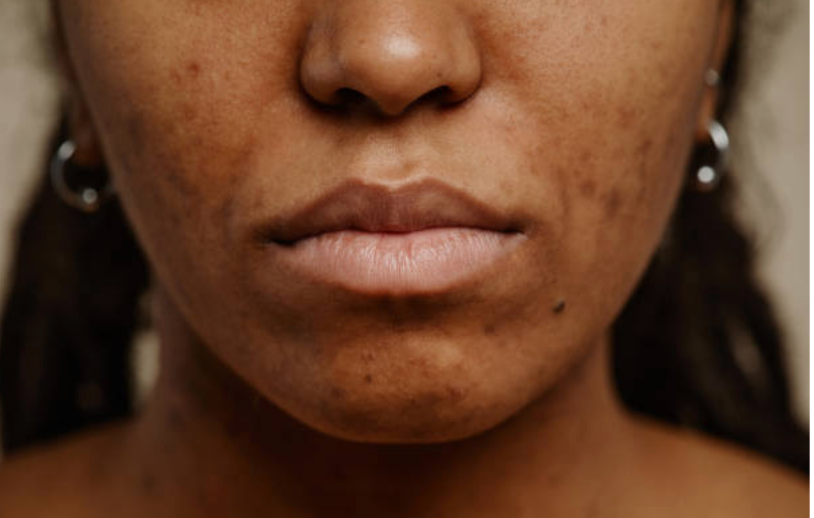
If Your Skin Reacts to Everything You Try, This Is Probably Why. And How to Reset It.

You have tried to be gentle. You have tried fragrance-free. You have tried cutting things out, adding things in, going back to basics. And somehow your skin still reacts, redness, tightness, breakouts, itching, a kind of permanent irritation that never fully clears no matter what you do or do not put on it.
If this sounds familiar, the instinct is usually to search for the product you have not tried yet. A new serum, a different moisturiser, a more expensive cleanser. But the answer is almost never another product. Most of the time, skin that reacts to everything is skin that has been pushed beyond its capacity to cope and the solution is not to find the right product. It is to stop, strip everything back, and let the skin do what it was designed to do: repair itself.
This post explains what is actually happening when skin becomes reactive to everything, why modern skincare routines are often the cause rather than the cure, and the specific minimalist reset that consistently works two products, no fragrance, no essential oils, and enough patience to let the barrier rebuild. It is not exciting advice. But it is the advice that works.
What is actually happening when your skin reacts to everything

Skin that reacts to a broad range of products, not just one obvious irritant, but seemingly random things, including products it previously tolerated, is almost always a skin barrier problem. Understanding the barrier is the key to everything that follows.
The skin's outer barrier, the stratum corneum is a layered structure of flattened skin cells held together by a matrix of lipids: ceramides, fatty acids, and cholesterol. Think of it as a brick wall where the cells are the bricks and the lipids are the mortar. When this structure is intact, it does two things simultaneously: it keeps moisture in the skin and keeps irritants, bacteria, and allergens out. When the barrier is compromised, when the mortar develops gaps, both of those functions fail. Moisture escapes faster than normal, leading to dryness and tightness. Irritants and allergens penetrate more easily, triggering immune responses that produce redness, itching, and inflammation.
A compromised barrier is not just more sensitive to irritants in the environment. It is more sensitive to everything, including ingredients in skincare products that normal, intact skin would handle without any reaction. Fragrance, essential oils, preservatives, surfactants, acids, vitamin C serums, even some plant extracts that are genuinely beneficial for healthy skin can all trigger reactions in damaged barrier skin because the barrier cannot prevent them from penetrating to the reactive layers underneath.
This is why reactive skin seems to get worse with more products rather than better. Every new product you introduce, even ones marketed specifically for sensitive skin, is introducing ingredients to a surface that cannot distinguish between irritant and nourishment. The only real solution is to repair the barrier first, so it can do its job of filtering again.
“Your skin is not broken. It is exhausting. And the answer to exhaustion is rest, not more stimulation.”
Why most modern skincare routines make reactive skin worse

The skincare industry has a problem that nobody in it has much incentive to name honestly: the ten-step routine, the endless new product launches, the constant introduction of activities, all of it is genuinely damaging for a significant proportion of the people following it.
Excessive cleansing. Most people with reactive skin are washing their face too often and with cleansers that are too stripping. Sulphate-based foaming cleansers, which make up the majority of the face wash market, work by disrupting the lipid layer of the skin to remove oil and debris. In healthy skin this is manageable because the barrier repairs itself quickly. In already-compromised skin, every cleanse does more damage than the barrier can repair before the next one. The skin never catches up. The gap between damage and repair gets wider.
Too many active ingredients. Retinol, acids, vitamin C, niacinamide, exfoliants, the trend toward active ingredients is built on the reasonable premise that specific compounds can produce specific results. But active ingredients work by deliberately disrupting the skin's surface to prompt a response: exfoliants dissolve dead cells, retinol accelerates cell turnover, acids loosen the bonds between surface cells. In healthy skin these disruptions are managed and the skin responds as intended. In barrier-compromised skin, the same ingredients cause inflammation because the barrier cannot contain or direct the disruption. What should be a targeted treatment becomes a generalised immune response.
Fragrance and essential oils. Fragrance is the most common cause of contact dermatitis in skincare. This includes both synthetic fragrance and natural fragrance — essential oils, botanical extracts, and natural aromatic compounds can all trigger immune responses in sensitised skin, sometimes after years of tolerating them as the barrier gradually deteriorates. Fragrance allergy is cumulative: the skin may tolerate a product for months or years before the immune response tips into consistent reactivity. When this happens, many people blame the new product rather than recognising that the long-standing product they have been using has finally accumulated enough immune-system exposure to trigger a response.
The microbiome disruption no one talks about. The skin surface hosts a complex community of bacteria, fungi, and other microorganisms — the skin microbiome — that plays a crucial role in maintaining barrier function and regulating immune responses. Harsh cleansers, antibacterial ingredients, acids, and the constant introduction of new products all disrupt this community. When the beneficial bacteria that normally crowd out pathogens and support barrier function are depleted, both barrier integrity and immune reactivity suffer. This is now recognised by dermatologists as a significant driver of chronic sensitive skin — and it is one of the reasons simply stripping back to a minimal, microbiome-safe routine so often produces dramatic improvements.
Layering too many products. Every product you layer on the skin adds a new ingredient load. Even if each product is individually well-tolerated, the combination of multiple products, each with their own preservatives, emulsifiers, pH adjusters, and active compounds, creates a cumulative chemical environment on the skin surface that can overwhelm a compromised barrier. The more products in a routine, the more variables. The more variables, the harder it is to identify what is causing a reaction. The harder it is to identify the cause, the more products people try. It is a cycle that the skincare industry profits from but reactive skin cannot afford.
The reset — what it actually looks like

A skin barrier reset is exactly what it sounds like: you remove everything from your routine except the minimum required to cleanse and moisturise, and you give the barrier time to repair itself without further disruption. This is not a permanent routine. It is a period, typically four to eight weeks, during which you stop interfering so the skin can do its own work.
It sounds boring. It feels counterintuitive when your skin looks bad and you want to fix it. But for chronically reactive skin, doing nothing extra is genuinely the most active intervention available.
The reset has two components: the right cleanser and the right moisturiser. Not the most expensive. Not the most trending. The most neutral, no fragrance, no essential oils, no active ingredients, no synthetic preservatives where possible. Just clean, and seal.
Why Truth Body Butter for the reset

Truth Body Butter (Unscented) is the moisturiser for the reset. Like a Bar Soap, that is completely free from fragrance and essential oils. It should be built on unrefined organic shea butter, which delivers the ceramide-adjacent fatty acids that barrier-compromised skin is deficient in, specifically the stearic and oleic acids that form the mortar between skin cells, and the linoleic acid that eczema-prone and reactive skin characteristically lacks. It provides genuine barrier repair rather than just surface moisturisation, the difference between filling the gaps in the mortar and painting over the wall.
Apply Truth Body Butter to damp skin within two to three minutes of bathing. The same damp-skin principle that applies to all Zawadi Naturals products applies here with particular force: compromised barrier skin has even lower moisture retention than healthy skin, and the window between stepping out of the shower and the skin beginning to lose that surface moisture is the critical moment for the reset to work. Apply to the face and body after cleansing, let it absorb, and do not layer anything else on top. That is the whole routine.
One customer who uses the sea moss and lavender bar alongside the body butter, both recommended for dry/eczema-prone skin, said they would recommend both to friends and family. The unscented Truth versions are the stripped-back equivalent: the same barrier-repairing logic, none of the fragrance compounds, suitable for the most reactive skin on the planet.
What to expect during the reset period

Week one and two are often the hardest. If your skin has been in a state of chronic inflammation, it may feel strange to be doing so little. You might notice that it looks slightly worse before it looks better, this is a normal transition as the barrier begins to repair and the inflammatory backlog works its way out. What you should not see is new acute reactions: if Truth Bar Soap and Truth Body Butter are causing a reaction, it is worth patch testing on a small area of the inner wrist first to confirm, and consulting a dermatologist if reactions persist.
By weeks three and four, most people notice a meaningful reduction in baseline redness and irritation. The skin starts to feel less tight. Products that previously caused reactions may no longer trigger the same response, because the barrier is beginning to repair and can filter ingredients more effectively.
By weeks six to eight, the barrier has typically completed enough repair that the skin is measurably calmer and more resilient. This is when you can consider reintroducing one product at a time — a single new product, patch-tested first, introduced alone and held for at least two weeks before adding anything else. This deliberate, slow reintroduction is what allows you to actually identify what your skin tolerates and what it does not, rather than the reactive guesswork that comes with changing multiple products simultaneously.
What to avoid during the reset — and why each one matters

All fragrances. Both synthetic and natural. This includes essential oils, lavender, tea tree, eucalyptus, and citrus oils are all common sensitisers even though they are natural. The distinction between synthetic and natural fragrance is less relevant for reactive skin than the distinction between fragrant and fragrance-free. Everything during the reset should be fragrance-free without exception.
All active ingredients. Retinol, acids, vitamin C, niacinamide, exfoliants, all of it stops during the reset. These are tools for healthy skin to produce specific results. For compromised barrier skin, they are disruptions that the barrier cannot manage. Reintroduce them one at a time, slowly, after the barrier has been repaired.
Hot showers and baths. Heat strips the skin's natural lipids and dilates the blood vessels near the surface, increasing redness and sensitivity. During the reset, shower in warm rather than hot water. Keep bathing time short, five to ten minutes maximum. The goal is to cleanse without adding more barrier damage.
Anything new. The reset is not the time to try a new cleanser, a new SPF, a new laundry detergent, or anything else unfamiliar. Every new variable is a new potential cause of reaction that obscures whether the reset is working. The power of the reset comes from its simplicity, two familiar, confirmed-safe products and nothing else.
Touching your face. Hands carry bacteria and irritants that transfer to a compromised barrier more easily than healthy skin can manage. During the reset, be conscious of unnecessary face-touching throughout the day. Change pillowcases more frequently, at least twice a week, to reduce the bacterial and allergen load that skin is in contact with overnight.
After the reset — what to reintroduce and how

The reset period ends when your skin has been calm, non-reactive, and comfortable for at least two consecutive weeks. Not just better, genuinely settled. Redness gone or minimal. No tightness after cleansing. No lingering irritation.
From here, reintroduction is a one-at-a-time process with no exceptions. Pick the single product you most want to add back. Patch test it on the inside of your wrist for 24 hours. If no reaction, use it on your face or body for two weeks while keeping everything else the same. If your skin stays calm, it is safe to keep and you can consider adding the next product.
Two weeks per product sounds slow. It is slow. It is also the only way to actually know what your skin tolerates, which is knowledge you currently do not have, and which the six-product-at-a-time approach has been preventing you from building.
For most people who have completed the reset, reintroduction reveals that they tolerate far more products than they thought, because the reactivity was not to specific ingredients but to a compromised barrier that could not handle any of them. Once the barrier is repaired, the reactivity reduces dramatically. The skin was not fragile. It was overwhelming.
The products we would suggest reintroducing first after the reset: Tikiti Luxe Facial Oil three drops on the face, non-comedogenic, anti-inflammatory lavender and neroli at skin-safe concentrations, rich in the linoleic acid that barrier-damaged skin is deficient in. Introduce it for two weeks alone before adding anything else. African Black Soap for cleansing, Pink Prestige Whipped Body Butter for the body, if your skin has settled enough to handle the light natural fragrance.
“The skin that reacts to everything is not telling you to find the right product. It is telling you to stop and let it breathe.”
Who the reset is most relevant for — and when to see a dermatologist

The skin barrier reset described in this post is relevant for people whose reactivity is driven by barrier disruption and routine overload, the most common cause of chronic sensitive skin. But not all reactive skin has the same cause, and it is worth knowing when the reset approach is not enough on its own.
If you have persistent, severe reactions that include swelling, hives, or difficulty breathing, seek medical attention immediately. This is not a skincare issue.
If your reactive skin is accompanied by distinct, visible eczema patches, scaling, or weeping skin, a dermatologist is the right first step alongside any gentle skincare approach. The reset routine is appropriate for eczema-prone skin but severe or infected eczema needs medical assessment.
If your skin has been reactive for years and you have never identified a specific trigger despite eliminating products systematically, patch testing by a dermatologist or allergist can identify specific contact allergens that you would not be able to isolate at home. This is a different issue from generalised barrier compromise and needs a different approach.
For the majority of people whose skin has become progressively more reactive as their skincare routine became more complex, the reset is genuinely the answer. Not a cream, not a supplement, not another new ingredient. Two products, patience, and time.
Frequently Asked Questions
Q: How long does a skin barrier reset take?
A: Most people notice meaningful improvement within three to four weeks and a genuinely settled, calm baseline within six to eight weeks. Skin cells renew on a cycle of roughly 28 to 35 days, so allowing at least one full renewal cycle — and ideally two — gives the barrier time to complete a meaningful level of repair. The more compromised the barrier at the start of the reset, the longer it takes, but the results are also more dramatic.
Q: Can I use any makeup during the reset?
A: Ideally no, particularly not foundation and concealer, which introduce fragrance, pigments, and other ingredients to the skin surface throughout the day. If you absolutely need to wear makeup, choose the most minimal, fragrance-free option available and remove it thoroughly with Truth Bar Soap in the evening. SPF is the one non-negotiable — apply a fragrance-free SPF 30 as your only additional product during the reset if you will be outdoors.
Q: Is Truth Bar Soap safe for children and babies?
A: Yes, Truth Bar Soap is fragrance-free and essential-oil-free, making it suitable for children, babies, and pregnant women. It is one of the most gentle cleansers in the Zawadi Naturals range and is specifically designed for reactive, eczema-prone, and very sensitive skin. Always patch test first, and consult your health visitor or midwife if you have any concerns for a young baby.
Q: Can I do the reset if I have eczema?
A: The reset approach is very well-suited to eczema-prone skin. Truth Bar Soap and Truth Body Butter are both formulated specifically with eczema and sensitive skin in mind. However, if you are in an active eczema flare with weeping, infected, or severely inflamed skin, please seek medical advice before starting a new skincare routine. The reset is for maintenance and barrier repair, not for treating acute medical eczema flares.
Q: My skin looks worse in the first week of the reset — should I stop?
A: Not immediately. A mild initial worsening — increased dryness, slight redness, texture changes — is common as the skin adjusts to a simpler routine after being accustomed to the stimulation of actives and multiple products. Give it at least two full weeks before drawing conclusions. What you should stop for is a clear, acute reaction: burning, stinging, hives, or swelling after applying Truth Bar Soap or Truth Body Butter. Patch test on the inner wrist if you are concerned before applying more broadly.
Q: After the reset, can I go back to my previous routine?
A: That depends on what your previous routine was doing to your skin. If your skin was chronically reactive before the reset, returning to the exact same routine is likely to reproduce the same reactivity over time. The post-reset period is an opportunity to build a routine deliberately — adding one product at a time, understanding what your skin actually needs rather than what the skincare industry suggests it needs. Most people find they need significantly fewer products than they were using, and their skin is calmer and healthier for it.
Shop the Reset Routine
- Truth Body Butter
- Pink Prestige Whipped Body Butter
- Authentic African Black Soap
- Full Healing Eczema Collection
Related Reading
-
Hard Water and Your Skin: The Hidden UK Problem Behind Dry Skin, Eczema and Breakouts
-
Natural Eczema Treatments for Children: What a Mum of an Eczema Baby Actually Used
-
What Order to Apply Natural Skincare Products: The Simple 3-Step African Routine
-
Natural vs Clinical Skincare: What the Research Actually Says About African Botanical Ingredients
Has your skin been reacting to everything and you are not sure where to start? Leave a comment below with what your skin is doing and what you have tried — we will help you work out whether a reset is the right approach and exactly how to do it for your specific situation.