Dry Skin vs Dehydrated Skin: Why This Difference Completely Changes What You Need

Your skin feels tight. It looks a bit dull. It is uncomfortable, maybe flaky, and no matter how much moisturiser you apply, it never quite feels right. You have been calling it dry skin. You have been treating it as dry skin. And the products you are using are not making the lasting difference you expected.
There is a reasonable chance that the problem is not dry skin at all. Or not only dry skin. It might be dehydrated skin, which looks and feels almost identical but has a completely different cause, a completely different mechanism, and needs a completely different approach. Getting this wrong means applying the wrong products, in the wrong way, and wondering why nothing is working.
This is one of those distinctions that is genuinely worth understanding because it changes everything downstream. Here is the full explanation of what each condition actually is, how to tell them apart, and what the right products and technique are for each one.
The Core Distinction: Oil Versus Water

Dry skin and dehydrated skin are often used interchangeably. They should not be. They describe two completely different deficiencies in the skin, and treating one when you have the other produces limited results at best and counterproductive ones at worst.
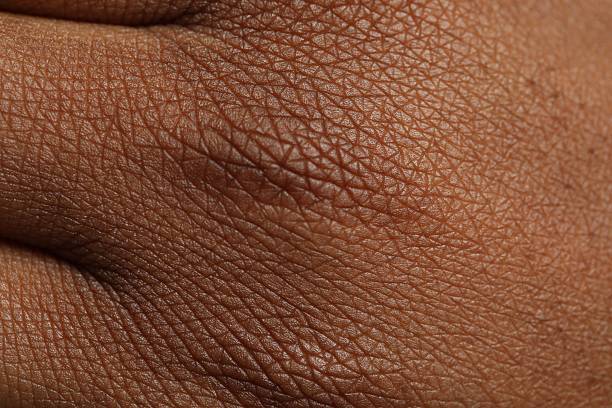
Dry skin is a skin type. It is a structural characteristic of how your skin is built, specifically, how much sebum (natural oil) your sebaceous glands produce. Dry skin produces insufficient sebum, which means the skin's natural lipid layer is depleted. The mortar between the cells of the stratum corneum is thin, the barrier is structurally compromised, and the skin cannot retain moisture adequately because the lipid matrix that normally prevents water loss is deficient. Dry skin is genetic and persistent; you are largely born with it, and it remains your skin type throughout your life, though it may worsen with age, environment, or medication.
Dehydrated skin is a skin condition. It is a temporary state of water deficiency that can affect any skin type, including oily skin. Dehydrated skin has sufficient or even excess oil production; what it lacks is water content in the skin cells themselves. This water deficiency is not caused by genetics. It is caused by external factors: insufficient water intake, environmental exposure (particularly centrally heated or air-conditioned air), harsh cleansers that strip moisture from the skin surface, weather, and lifestyle. Dehydrated skin is something that can change day to day, season to season, and in response to specific triggers.
The reason this matters practically is that dry skin needs oil, specifically the lipid-rich, barrier-repairing ingredients that compensate for the deficient sebum production. Dehydrated skin needs water sealed in, specifically the technique and products that prevent transepidermal water loss. Applying a rich oil to dehydrated skin that already has adequate sebum production addresses the wrong problem. Applying a water-based hydrating product to genuinely dry skin without an occlusive seal to keep the water in is equally ineffective.
"Dry skin lacks oil. Dehydrated skin lacks water. They look similar in the mirror. They need completely different solutions."
How to Tell Which One You Have: The Pinch Test and the Tell-Tale Signs

The pinch test. Gently pinch the skin on your cheek between two fingers, hold for two seconds, and release. On well-hydrated skin, it springs back immediately. On dehydrated skin, it takes a moment to settle back, sometimes leaving a brief impression. This is a rough guide rather than a clinical diagnosis, but it is a useful first indicator.
Signs that point to dry skin:
- Skin feels rough or tight consistently, not just at certain times of day or in certain weather.
- Flaking, scaling, or rough patches that return even when you moisturise well.
- Skin has always felt this way, not a recent development.
- Skin never feels oily, even in the T-zone, even in summer.
- Responds well to rich, occlusive products but the effect fades within a few hours.
- Fine lines and a crepey texture are visible even on young skin.
Signs that point to dehydrated skin:
- Skin can be oily in the T-zone but still feels tight or uncomfortable.
- Skin looks dull and lacks bounce or plumpness.
- Fine lines look more pronounced at certain times — particularly when you have not drunk enough water, in centrally heated rooms, or after a flight.
- Skin feels worse in winter and in air-conditioned environments.
- The dullness and tightness improve noticeably after drinking water or applying a hydrating product.
- Skin responds well initially to moisturiser, but the effect does not last long.
You can have both simultaneously. This is more common than most people realise, particularly in the UK where centrally heated indoor environments create chronic low humidity even in people without a naturally dry skin type. Someone with constitutionally dry skin living in a hard water area in London is almost certainly dealing with both oil deficiency and water deficiency at the same time. The treatment addresses both layers.
Why UK Conditions Make Both Worse: The Environment That Nobody Accounts For

The UK creates a specific environmental combination that worsens both dry skin and dehydration simultaneously, and understanding this is particularly important for anyone who moved here from a warmer or more humid country and noticed their skin changing.
Hard water strips the lipid barrier. The calcium and magnesium minerals in hard water, present at very high concentrations across most of England, react with the fatty acids in skin's natural oils and in soap formulas to form insoluble calcium soaps. These deposits strip the skin's natural lipid layer with every wash, directly worsening dry skin by depleting the sebum and barrier lipids that were already deficient. For people with constitutionally dry skin, hard water makes a manageable condition significantly worse.
Central heating eliminates indoor humidity. UK homes in winter maintain indoor humidity levels of 20 to 30%, comparable to many desert environments. At this humidity, the moisture gradient between the skin surface and the surrounding air is steep, and transepidermal water loss accelerates dramatically. Water is drawn out of skin cells faster than it can be replaced, regardless of how much water you drink. This is the primary cause of dehydrated skin in the UK winter, and it affects everyone, not just people with dry skin types.
Sulphate cleansers compound the problem. Most standard face washes and body washes use sodium lauryl or laureth sulphate as their primary surfactant. These strip both water and oil from the skin surface simultaneously, worsening both dry skin and dehydration at the cleansing step itself. In the UK's already-challenging environment, using a sulphate cleanser is like trying to fill a bath while leaving the plug out.
Treating Dry Skin: What It Actually Needs

Dry skin needs lipids. Specifically, it needs the fatty acids that the sebaceous glands are not producing in sufficient quantity: oleic acid, linoleic acid, and stearic acid, delivered topically in a form that can integrate with the skin's natural lipid matrix and reinforce the deficient barrier structure.
Pink Prestige Whipped Body Butter is the primary treatment for dry body skin. Its unrefined organic shea butter base delivers the full spectrum of fatty acids that dry skin's deficient barrier needs. Unrefined is specifically important here; the refining process removes the beneficial fatty acids and vitamins that make shea butter therapeutically effective, leaving only the occlusive base. Refined shea seals the skin but does not nourish it. Unrefined shea repairs while it seals.
The marula oil in Pink Prestige provides oleic acid in a lightweight, fast-absorbing form that penetrates the stratum corneum more effectively than the shea butter alone. The illipe butter provides an additional occlusive layer that extends the seal. Together they address dry skin from three angles: replenish the barrier lipids (shea fatty acids), penetrate to reinforce the deeper barrier layers (marula), and protect the surface (illipe).
Application technique for dry skin specifically: apply to damp skin within two to three minutes of bathing. This is not optional for dry skin; it is the technique that seals the surface moisture that dry skin loses almost immediately to the dry air. Applied to dry skin, Pink Prestige is working against a barrier that has already lost its surface moisture. Applied to damp skin, it seals that moisture in before it can escape.
For very dry or eczema-prone skin, the Truth Luxe Silk Body Butter provides the same lipid-rich barrier repair in a completely fragrance-free, essential-oil-free formulation. When skin is sensitised or reactive, which very dry skin often is because the compromised barrier allows irritants to penetrate more easily, removing all potential contact sensitisers while maintaining the barrier-repair function is essential. Truth Luxe Silk Body Butter does this.
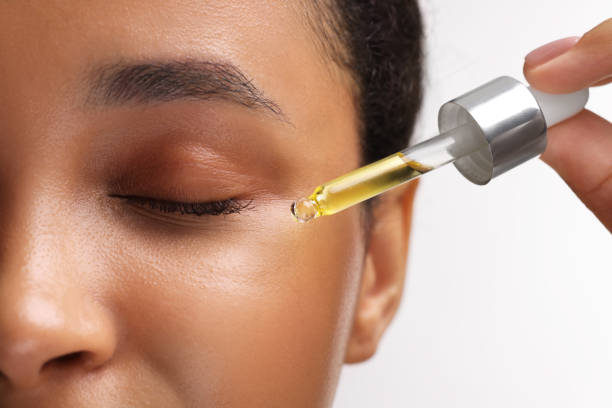
For dry facial skin, Tikiti Luxe Nutrient Rich Glow & Repair Facial Oil delivers a concentrated facial lipid layer in three drops. The watermelon seed oil base has a comedogenic rating of 0 to 1 and a fatty acid profile suited to all skin types. Pressed into damp facial skin after cleansing, it absorbs within sixty seconds and provides the lipid reinforcement that dry facial skin needs without the heaviness of cream formulations. The rosehip and sea buckthorn add vitamins A and C that support the barrier repair process beyond simple moisturisation.
Treating Dehydrated Skin: What It Actually Needs

Dehydrated skin needs water kept in. The distinction from dry skin treatment is important: dehydrated skin does not need more oil. It needs the water that is already present, or that is added at the right moment, to be prevented from evaporating.
The mechanism of dehydrated skin treatment is the reduction of transepidermal water loss. The goal is not to add water to the skin from the inside or the outside, but to create conditions where the water already in the skin cells can stay there rather than escaping through a compromised or overwhelmed barrier.
The damp-skin technique is the primary treatment for dehydration. When you apply any moisturiser, oil or butter, to skin that is still damp from bathing, you are sealing the surface moisture that is already there. This surface moisture is the most accessible water your skin will have all day; it is present at the skin surface at the ideal concentration for absorption. Sealing it in before it evaporates is more effective than any humectant or hydrating ingredient applied later to dry skin.
Timing is everything. The window between stepping out of the shower and skin surface moisture beginning to evaporate is two to three minutes. Apply your moisturiser within that window, and you are sealing maximum moisture against the skin. Wait longer and increasingly less surface moisture remains to be sealed.
Tikiti Luxe applied to damp facial skin does two things simultaneously for dehydrated skin. Its oil base creates a partial occlusive seal that reduces facial TEWL, keeping surface moisture in the skin. And its lightweight formula absorbs quickly enough not to feel heavy on skin that is not deficient in oil, unlike a rich cream that sits on top of adequately oiled dehydrated skin and creates congestion.
For very dehydrated skin, the Divine Cocoon Vitamin B3 Facial Milk applied before Tikiti Luxe provides a layer of niacinamide that strengthens the barrier function responsible for retaining moisture, working from the inside of the barrier structure outward rather than from the outside in. Niacinamide supports ceramide production, which is the barrier's own natural TEWL-reducing mechanism. Apply the Facial Milk to damp skin first, allow twenty seconds to absorb, then apply Tikiti Luxe over the top to seal both the milk and the surface moisture simultaneously.
Humidifiers address the environmental cause of dehydration. No skincare product fully compensates for the 20 to 30 percent indoor humidity that UK central heating creates in winter. A bedroom humidifier maintaining 50 percent relative humidity reduces overnight TEWL dramatically, allowing the skin's barrier to repair itself during sleep rather than constantly losing moisture to the dry air. For chronically dehydrated skin in winter UK conditions, a humidifier alongside the damp-skin technique is the most complete treatment.
When You Have Both — The Most Common UK Scenario

Most people with dry skin living in the UK have both conditions simultaneously. The constitutionally deficient sebum production of dry skin creates an already-compromised barrier. The hard water, central heating, and sulphate cleanser exposure then strips moisture from that compromised barrier at an accelerated rate. The result is a double deficit: not enough oil in the barrier structure, and not enough water retained in the skin cells.
The routine that addresses both is straightforward and maps directly onto the Zawadi approach:
- Cleanse with African Black Soap. The plant ash chemistry does not create the calcium soap deposits that sulphate cleansers deposit on the skin in hard water. The shea butter in the formula begins replenishing barrier lipids during the cleansing step itself. The skin that emerges from this cleanse is genuinely clean without the lipid stripping that perpetuates both dry skin and dehydration.
- Apply Tikiti Luxe to damp facial skin within sixty seconds of cleansing. The oil delivers lipids to the deficient barrier (addressing dry skin) and seals the surface moisture before it evaporates (addressing dehydration). Both problems are approached simultaneously in a single product applied at the right moment.
- Apply Pink Prestige to damp body skin within two to three minutes of bathing. The rich shea butter blend delivers the barrier-lipid reinforcement that dry body skin needs, while the damp-skin technique ensures that body moisture is sealed in rather than lost to the centrally heated air.
The technique is as important as the product. The same products applied to dry skin rather than damp skin address the oil deficiency of dry skin but miss the water-retention problem of dehydration. Getting both right is what produces the lasting comfort and hydration that people with both conditions have often never experienced from skincare before.
"The right product on dry skin is half the answer. The right product on damp skin at the right moment is the complete one."
The Counterintuitive Case: Oily Skin That Is Also Dehydrated

One of the most misunderstood skin combinations is oily and dehydrated simultaneously. It seems contradictory: how can skin that produces too much oil also be lacking in water? But it is extremely common, and it is the condition behind the "greasy but somehow tight" feeling that many people with oily skin experience.
The explanation is simple once you understand the dry vs dehydrated distinction: sebum production (oil) and skin cell hydration (water) are entirely separate systems. Oily skin has overactive sebaceous glands producing excess oil. Dehydrated skin has insufficient water content in the skin cells. These two conditions operate independently and can absolutely coexist.
The most common cause of oily-dehydrated skin is the use of harsh cleansers, particularly sulphate face washes marketed for oily skin, that strip both the oil and moisture from the skin surface simultaneously. The sebaceous glands respond to the stripping by producing more oil as a compensatory mechanism (making the oily skin worse). The water in the skin cells evaporates through the disrupted surface (making the dehydration worse). The result is skin that is shinier than ever but somehow also tight, dull, and uncomfortable.
The treatment for oily-dehydrated skin is counterintuitive to most people who have it: switch to a non-stripping cleanser (African Black Soap's plant ash chemistry does not trigger the compensatory oil production cycle), apply Tikiti Luxe's lightweight oil to damp skin rather than reaching for a gel moisturiser that provides temporary water without sealing it in. Over three to four weeks, the sebum overproduction typically reduces as the compensatory trigger (stripping) is removed, and the dehydration resolves as surface moisture is consistently sealed.
Frequently Asked Questions
Q: Can oily skin be dehydrated?
A: Yes, and it frequently is. Oily skin and dehydrated skin describe two completely separate systems: sebum production (oil) and skin cell water content (water). Harsh cleansers, centrally heated air, hard water, and hot showers can all deprive skin cells of water while the sebaceous glands continue producing oil at their normal or elevated rate. The result is skin that is shiny but also tight, dull, and lacking in plumpness. The treatment is a gentle non-stripping cleanser and a lightweight moisturiser applied to damp skin.
Q: Does drinking more water fix dehydrated skin?
A: Partially. If you are chronically underhydrated, drinking significantly less than your body needs, increasing water intake will improve skin hydration measurably. But for most people who are adequately hydrated, drinking more water does not produce visible skin improvement because the skin's water content is primarily regulated by transepidermal water loss, how quickly moisture escapes through the barrier, rather than by how much water arrives from the bloodstream. Sealing surface moisture with the damp-skin technique is significantly more effective than drinking extra water for addressing dehydrated skin.
Q: How do I know if Pink Prestige is right for me or if I need something lighter?
A: Pink Prestige is formulated for dry to normal skin that needs rich barrier repair; the unrefined shea butter base is genuinely rich. For dry skin and for skin that is both dehydrated, it is the right choice applied to damp skin. For oily or combination skin that is dehydrated but not dry, Tikiti Luxe applied to damp facial skin and the Asaké Rose Glow Body Oil applied to damp body skin provide lighter moisture-sealing without adding the additional lipid richness that oily skin does not need.
Q: My skin is very sensitive and reactive. What do you recommend for dry skin?
A: Truth Luxe Silk Body Butter is the fragrance-free, essential-oil-free option for very dry, sensitive, reactive, or eczema-prone skin. It delivers the same barrier-repairing lipid profile as Pink Prestige without any potential contact sensitisers. For the face, Tikiti Luxe contains lavender and neroli essential oils at low concentrations; if your skin is highly reactive, patch test on the inner wrist before full facial application. African Black Soap is gentle enough for sensitive dry skin as a daily cleanser.
Q: I moved to the UK, and my skin got much drier — is this dry skin or dehydration?
A: Almost certainly both, caused by the hard water and central heating combination unique to the UK environment. The calcium and magnesium in UK hard water strip barrier lipids with every wash (causing dry skin symptoms) while central heating removes indoor humidity and accelerates transepidermal water loss (causing dehydration). The Zawadi UK climate post covers this in detail, but the practical answer is: African Black Soap to cleanse without hard water mineral stripping, Tikiti Luxe to damp facial skin, Pink Prestige to damp body skin. Both deficiencies addressed simultaneously.
Q: What is the difference between applying a facial oil and a facial moisturiser?
A: A conventional facial moisturiser is typically water-based with emulsifiers, humectants, and occlusives — it delivers a mixture of water and ingredients to the skin surface. A facial oil like Tikiti Luxe is anhydrous (no water) and delivers pure lipids directly to the skin's own lipid structure. For dry skin, the oil is more directly addressing the lipid deficiency. For dehydrated skin, the key is not whether you apply oil or cream but whether you apply it to damp skin at the right moment — because that is what determines how much surface moisture is sealed in.
Shop the Right Products for Your Skin
- Tikiti Luxe Nutrient Rich Glow & Repair Facial Oil
- Pink Prestige Whipped Body Butter
- Truth Luxe Silk Body Butter
- Divine Cocoon Vitamin B3 Facial Milk
- Authentic African Black Soap
Related Reading
- Why Your Moisturiser Sits on Top of Your Skin Instead of Absorbing
- Does Drinking Water Actually Improve Your Skin? The Honest Answer
- Hard Water and Your Skin: The Hidden UK Problem Behind Dry Skin, Eczema and Breakouts
- How the UK Climate Affects Your Skin Differently — and Why Immigrants Notice It Most
Not sure whether you have dry skin, dehydrated skin, or both? Leave a comment below with your skin type, where you live in the UK, and what products you are currently using — we will tell you exactly which condition you are dealing with and the right routine for it.