Natural Hair Oil for Growth and Scalp Health

The natural hair oil market is enormous, noisy, and largely full of promises that do not survive honest scrutiny. Castor oil in every bottle. "Stimulates growth" on every label. Before-and-after photographs that owe more to lighting and hair extensions than to the product. If you have been searching for a hair oil that genuinely supports scalp health and hair retention and you have been disappointed before, you are entitled to be sceptical.
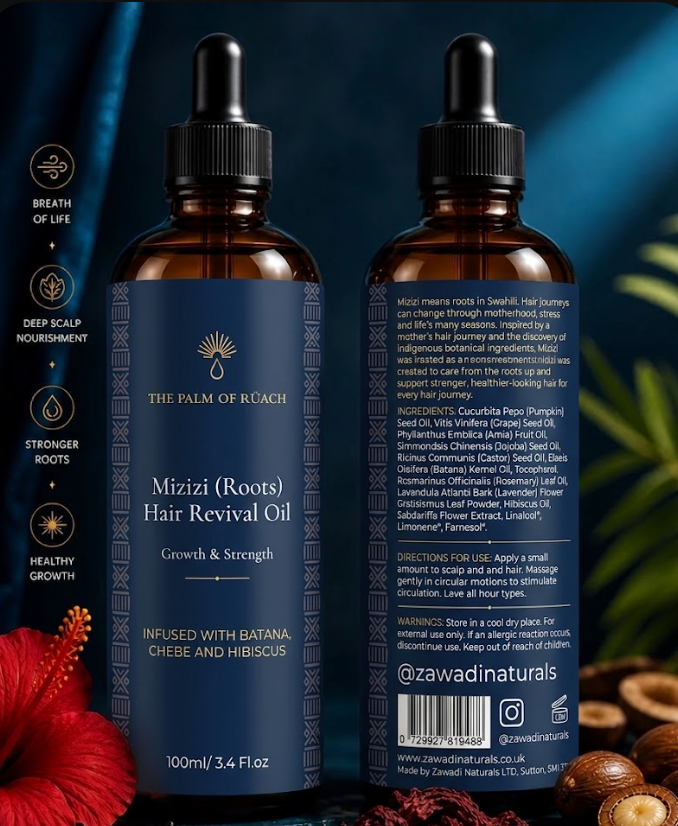
This post takes a different approach. It explains what hair oils can actually do and what they cannot do, because that distinction matters. It explains the specific ingredients in Mizizi (Roots) Hair Revival Oil, what the evidence says about each of them, and why the combination of African botanical tradition and targeted nutritional science makes this a different kind of product from what fills most hair oil shelves.
Mizizi means Roots in Swahili. The name is the philosophy: healthy hair begins with a healthy scalp. Everything that follows explains why that is true, and what it means for what you actually apply to your head.
What Hair Oils Can Actually Do — and What They Cannot

Starting with honesty is the only useful way to approach this topic. No topical hair oil can create new hair follicles. No oil can reverse genetic androgenetic alopecia. No product applied to the outside of the hair shaft can fundamentally change the rate of hair growth, which is genetically determined at approximately 1.25 centimetres per month for most adults.
What hair oils genuinely can do is significant, but it is different from the claims most products make.

Support scalp health. The scalp is skin. It has the same fundamental needs as facial skin; it can become dry, inflamed, imbalanced in its microbiome, affected by hard water mineral deposits, and stressed by hormonal fluctuations. An unhealthy scalp environment inhibits the hair growth that follicles would otherwise produce. Addressing scalp health with the right ingredients creates conditions where the follicles can function optimally, which means less shedding, better retention, and over time the appearance of fuller, stronger hair.

Reduce breakage. Most of what people experience as "hair not growing" is actually hair growing but breaking before it can retain length. The average Black hair strand is significantly more vulnerable to mechanical breakage than straight hair due to its curl structure; the bends in the hair shaft are structural weak points that stress when the hair is manipulated, detangled, or stretched. Oils that penetrate the hair shaft rather than just coating it can significantly reduce this breakage, producing visible length retention over months of consistent use.

Nourish and protect strands. Hair that is adequately nourished, with the fatty acids, vitamins, and proteins it needs, is physically stronger and more elastic. Elastic hair bends without breaking; brittle hair snaps. The right oils deliver the nutrients that support this elasticity directly to the hair structure.
Address specific concerns. Postpartum shedding, hormonal hair thinning, menopausal hair changes, and the dry scalp and breakage that comes from hard water and protective styles are all addressable with the right targeted ingredients. These are not growth claims; they are specific, mechanistic benefits with evidence behind them.
Understanding this distinction, scalp health and breakage reduction rather than miraculous growth stimulation, is what allows you to choose the right product and have realistic expectations that lead to real results.
"Healthy hair does not grow faster. It breaks less. That difference, between hair that grows and snaps, and hair that grows and stays, is what a genuinely good hair oil produces."
Why the Scalp Is Where All Hair Health Begins

Every strand of hair originates in a follicle embedded in the scalp dermis. The health of that follicle determines everything about the hair it produces, its thickness, its strength, the duration of its growth phase, and whether it produces hair at all. Follicles that are chronically inflamed, oxygen-deprived, or blocked by mineral deposits and product buildup produce thinner, weaker hair strands and have shorter active growth cycles.
The scalp is also affected by many of the same environmental factors that affect facial skin, and in the UK, the hard water problem is among the most significant. The calcium and magnesium deposits that hard water leaves on facial skin after every wash do the same to the scalp. They bind to the hair cuticle, create surface roughness, block follicle openings, and produce the persistent dry, uncomfortable scalp feeling that many people in hard water areas experience regardless of how frequently they wash their hair.
This is specifically relevant for Black hair, which is washed less frequently than straight hair and therefore accumulates mineral deposits over longer periods before cleansing. The hard water issue in London and the South East, where the majority of the UK's Black British population is concentrated, creates a compound problem: mineral buildup on the scalp, blocked follicles, surface roughness on the hair shaft, and the breakage that results from each of these.
The Mizizi scalp massage protocol, applying the oil directly to parted sections of the scalp and massaging for two to three minutes, addresses this at the root level. The mechanical stimulation of scalp massage has published evidence for improving circulation to the follicles (a 2016 study in ePlasty showed increased hair thickness in participants receiving four-minute daily scalp massages over 24 weeks). Combined with the active ingredients delivered during massage, the protocol is genuinely more than just applying oil.
The Mizizi Formula: Every Ingredient Explained
Batana Oil
Elaeis Oleifera (Batana) Kernel Oil
Batana oil, extracted from the kernel of the American oil palm and used for centuries by the Miskito people of Honduras for hair care, is rich in oleic acid, vitamin E, and phytosterols. It has become TikTok's most-searched emerging hair oil precisely because early adopters report significant improvements in hair texture, shine, and reduced breakage. Its oleic acid profile allows it to penetrate the hair cortex rather than just coating the surface, delivering nourishment where the hair structure is built. This is the heavyweight botanical anchor of the Mizizi formula.
Chebe Leaf Powder
Croton Gratissimus Leaf Powder

Chebe is a plant from the Chad Basin region of Central Africa, and it has been used by Chadian women, particularly the Sara Kaba community, for generations as a hair treatment credited with retaining extraordinary length. The mechanism is primarily coating and strengthening the hair shaft; chebe's combination of resins, minerals, and plant compounds fills micro-cracks in the cuticle and forms a protective film that dramatically reduces the mechanical breakage that prevents length retention, particularly on tightly coiled hair types. Research into chebe is at an early stage, but traditional use data is consistent and compelling.
Hibiscus Flower Extract
Hibiscus Sabdariffa Flower Extract

Hibiscus has a documented history of use in Ayurvedic hair care and across East African traditions for scalp nourishment and hair strengthening. Its alpha hydroxy acids gently exfoliate the scalp surface, removing dead cells and mineral buildup from follicle openings without harsh chemical intervention. Its amino acids support the keratin structure of the hair shaft. Its antioxidant compounds protect follicle cells from the oxidative stress that contributes to premature follicle miniaturisation, the mechanism behind stress and hormonal hair thinning. This is the ingredient that bridges scalp cleansing and hair protection in a single compound.
Rosemary Leaf Oil
Rosmarinus Officinalis Leaf Oil

Rosemary oil is the best-evidenced natural ingredient for hair growth support. A 2015 randomised controlled trial published in SKINmed compared rosemary oil to 2% minoxidil in participants with androgenetic alopecia over six months. Both groups showed equivalent hair count improvements, with rosemary oil producing significantly less scalp itching. The proposed mechanism is improved microcirculation to the follicle — the same mechanism as minoxidil. Applied via scalp massage in the Mizizi protocol, rosemary oil's circulatory effect is activated and amplified by the mechanical stimulation.
Peppermint Oil
Mentha Piperita Oil

Peppermint oil applied topically produced the greatest increase in hair growth of four tested oils (including minoxidil) in animal models, through significant increases in follicle number, follicle depth, and dermal papilla size. The proposed mechanism is vasodilatation; peppermint's menthol compounds dilate scalp blood vessels, increasing blood flow and oxygen delivery to follicles. Combined with rosemary oil and scalp massage, the circulatory stimulation of the Mizizi application protocol is compounded across three separate mechanisms.
Pumpkin Seed Oil
Cucurbita Pepo (Pumpkin) Seed Oil

A 2014 randomised controlled trial in Evidence-Based Complementary and Alternative Medicine showed that pumpkin seed oil supplementation produced a 40% increase in hair count in men with androgenetic alopecia over 24 weeks, compared to a 10% increase in the placebo group. The mechanism is proposed to be 5-alpha-reductase inhibition, blocking the enzyme that converts testosterone to DHT, which is the primary driver of hormonal hair thinning in both men and women. Topical application delivers the active phytosterols directly to the scalp where DHT-mediated follicle miniaturisation begins.
Amla (Indian Gooseberry) Oil
Phyllanthus Emblica (Amla) Fruit Oil

Amla is one of the richest natural sources of vitamin C, the cofactor required for collagen synthesis in the dermal papilla surrounding each follicle. Collagen in the follicle structure supports the papilla's ability to anchor and nourish the growing hair shaft. Amla also contains gallic acid and ellagic acid compounds with documented anti-inflammatory and antioxidant activity, addressing the scalp inflammation that characterises many forms of hair thinning. Its traditional use across South Asian hair care spanning centuries provides a strong evidence base that complements its increasingly documented clinical properties.
Castor Oil
Ricinus Communis (Castor) Seed Oil

Castor oil is the most widely used hair growth oil globally, largely due to its high ricinoleic acid content, a unique 18-carbon hydroxy fatty acid that penetrates both the scalp and hair shaft, providing deep moisture retention and anti-inflammatory activity at the follicle level. Its viscosity also means it remains at the scalp surface for longer than most oils, extending the contact time of its active compounds with follicle tissue. Used in combination with the lighter carrier oils in the Mizizi formula, castor oil's penetrating properties deliver its ricinoleic acid without the heaviness of using it alone.
Jojoba Seed Oil
Simmondsia Chinensis (Jojoba) Seed Oil

Jojoba is technically a liquid wax ester rather than an oil, and its structure closely mimics the composition of human sebum. This makes it the ideal carrier for the rest of the Mizizi formula — it penetrates the scalp barrier efficiently, carrying the active compounds with it, and its wax ester structure seals the hair cuticle without the greasiness of heavier oils. It also has documented anti-inflammatory properties relevant to inflamed, irritated, or dry scalp conditions.
Grape Seed Oil
Vitis Vinifera (Grape) Seed Oil

A lightweight carrier oil with a high linoleic acid content and one of the lowest comedogenic ratings of any botanical oil. It absorbs quickly and cleanly, thinning the formula for scalp application without leaving a heavy residue. Its proanthocyanidins (OPCs) have evidence published that promotes hair growth by activating the Wnt/β-catenin pathway, the same cellular signalling pathway that regulates follicle cycling from the resting to the growing phase.
The Specific Hair Concerns Mizizi Addresses — and Who It Is Right For

Postpartum hair shedding. The dramatic oestrogen drop after delivery triggers telogen effluvium, a sudden shift of follicles from the active (anagen) to the resting (telogen) phase, producing the significant shedding that typically peaks around three to four months postpartum. Mizizi's formula addresses this phase shift through the scalp nourishment and circulatory stimulation that supports follicles returning to the active growth phase faster than they would without intervention. The formula is also free from ingredients of concern during breastfeeding.

Hormonal and menopausal hair thinning. The perimenopause and menopause period produces a drop in oestrogen that counters the natural DHT-blocking effect oestrogen provides in women. As DHT's influence on follicles increases, follicle miniaturisation begins, producing progressively thinner hair strands and shorter growth cycles. Pumpkin seed oil's 5-alpha-reductase inhibition directly addresses this mechanism. Rosemary oil's circulation improvement supports the diminished blood flow to follicles that also characterises menopausal hair changes.

Protective style scalp care. Braids, locs, twists, wigs, and weaves protect the hair length but create a specific scalp challenge: the scalp is inaccessible for routine cleansing, and moisture cannot reach it naturally from shampooing. Applying Mizizi to the scalp between wash days, parting between braids or locs to reach the scalp directly, nourishes and moisturises the scalp environment throughout the protective style period. The lightweight formula absorbs without creating the product buildup that makes protective styles difficult to remove cleanly.

Hard water scalp damage. For Black hair wearers in London and the South East, hard water mineral deposits accumulate on the scalp between washes. The Hibiscus AHAs in Mizizi provide the gentle scalp exfoliation that breaks down these mineral deposits and clears follicle openings, while the carrier oils condition the scalp surface that the minerals have dried and roughened. This is the specific UK environmental problem that most hair oils, formulated for other markets, do not address.

Breakage and length retention. For anyone whose hair appears to grow slowly but whose scalp is healthy, the issue is almost certainly breakage rather than growth rate. Chebe's cuticle-filling and shaft-strengthening mechanism, combined with castor oil's deep moisture and jojoba's cuticle sealing, addresses the three main structural causes of hair breakage: cuticle damage, moisture loss, and mechanical stress at the curl's bend points.
How to Use Mizizi Hair Revival Oil for Best Results

Section the hair: use clips or hair ties to create clear sections across the scalp. You need to reach the scalp surface directly, not just distribute oil through the hair lengths.
Apply directly to the scalp using the dropper or by tipping a small amount onto your fingertips. Less is more; the scalp absorbs what it needs, and excess sits on the surface, creating the greasy feeling that makes scalp oils unpleasant to use. A few drops per section, applied along the parting.
Massage for two to three minutes using circular motions with fingertip pressure. This is not optional; the mechanical stimulation activates circulation, drives the oil compounds into the scalp tissue, and produces the vasodilatory effect that the rosemary and peppermint oils are designed to deliver. Massage without pressure is not effective. Firm, consistent circular motion on the scalp surface, not rubbing the hair itself, is the correct technique.
Smooth any remaining oil through the lengths and particularly the ends, where breakage is most common. The Chebe and castor oil coating effect is most beneficial at the oldest, most vulnerable parts of the hair strand.
Use three to four times per week for the first month, then reduce to two to three times per week for maintenance. The results of scalp health improvement and breakage reduction are cumulative over months of consistent use, not visible after one or two applications.
A Specific Note for UK Users: The Hard Water Dimension

If you live in London, the South East, the Midlands, or the East of England, your tap water is hard to very hard. The calcium and magnesium it deposits on your scalp with every wash directly interfere with scalp health in ways that most hair care advice, written for markets with softer water, does not account for.
The Hibiscus Sabdariffa extract in Mizizi provides the gentle AHA exfoliation that helps break down these mineral deposits at the scalp surface. For the best results in hard water areas, apply Mizizi to a slightly damp scalp rather than a completely dry one — the moisture helps the hibiscus AHAs work more effectively on surface mineral buildup. If possible, apply after rinsing with filtered or softened water, which removes the mineral layer from the hair and scalp surface before the oil treatment.
This is the specific UK context that makes Mizizi more than a transplanted product from another market. The formula was developed with awareness of the hard water problem that affects the majority of Zawadi Naturals' core UK audience.
"Mizizi means Roots. Because healthy hair does not start at the strand — it starts at the scalp. Everything above the surface is only as strong as what is happening below it."
Frequently Asked Questions
Q: How long will it take to see results from Mizizi Hair Revival Oil?
A: Breakage reduction is typically noticeable within four to six weeks of consistent use: less hair on the brush, less shedding during detangling, and improved hair texture and strength. Scalp comfort improvements (less dryness, itching, or tightness) are typically noticeable within two to three weeks. Visible length retention, seeing that the hair is retaining the growth it is producing, takes three to six months of consistent use because it requires enough growth cycles to demonstrate the compound effect of reduced breakage. Do not evaluate the oil by how the hair looks after one or two applications.
Q: Can I use Mizizi on relaxed, colour-treated, or heat-styled hair?
A: Yes. Mizizi is suitable for all hair types and textures, including relaxed, colour-treated, heat-styled, and natural hair. The formula is specifically beneficial for chemically treated hair because the relaxer process compromises the cuticle structure that Chebe and castor oil work to reinforce. For colour-treated hair, the antioxidant compounds in amla and hibiscus help protect against the oxidative damage that accelerates colour fade and structural degradation.
Q: Is Mizizi suitable for postpartum shedding?
A: Yes, and this is one of the specific concerns the formula was designed to address. The postpartum period is one of the most distressing hair shedding experiences for many women, and it disproportionately affects Black women who may already have hair that is prone to breakage. Mizizi's circulatory stimulation (rosemary, peppermint, scalp massage) supports follicles returning to the active growth phase. The formula is free from ingredients of concern during breastfeeding. Begin using it from about six weeks postpartum when the scalp has settled after delivery.
Q: Can I use Mizizi while wearing braids, locs, or wigs?
A: Yes, and this is one of Mizizi's most important use cases. Apply directly to the scalp by parting between braids or locs and applying small amounts along the parting. For wigs, remove the wig to apply the oil directly to the scalp and allow it to absorb before replacing. The lightweight formula is specifically designed not to create the heavy buildup that makes protective styles difficult to maintain. Use two to three times per week throughout the protective style period.
Q: Will Mizizi make my hair feel greasy?
A: Applied to the scalp in small amounts and massaged in as directed, Mizizi should not leave a greasy feeling on the hair lengths. The jojoba and grape seed oil carriers absorb quickly. The golden amber colour of the formula will dilute into the scalp and hair without leaving a heavy residue. If the hair feels excessively oily after application, reduce the quantity per session — for most hair types, three to five drops per section is sufficient for the scalp application, with a few additional drops for the lengths if needed.
Q: Can men use Mizizi for hair thinning or a receding hairline?
A: Yes. Mizizi is formulated for all hair types and addresses the mechanisms of hair thinning that affect both men and women: follicle inflammation, DHT sensitivity (through pumpkin seed oil), circulation to the follicle (through rosemary and peppermint massage), and scalp health. For male pattern hair thinning specifically, the pumpkin seed oil's 5-alpha-reductase inhibition is the most directly relevant mechanism. Consistent application to the hairline and crown with regular massage is the most effective approach for the areas typically affected in male pattern thinning.
Shop the Products Mentioned in This Post
- Mizizi (Roots) Hair Revival Oil
- Authentic African Black Soap
- Tikiti Luxe Nutrient Rich Glow & Repair Facial Oil
Have questions about your specific hair concern — postpartum shedding, protective style care, menopausal thinning, or hard water scalp problems? Leave a comment below, and we will give you specific guidance on the Mizizi application approach for your situation.