Why Your Moisturiser Sits on Top of Your Skin Instead of Absorbing: The Technique Nobody Tells You

You have bought a good moisturiser. You apply it after your shower. And then you stand there for five minutes, waiting for it to sink in, wondering why your skin still feels like it has a greasy, coated film on it, never quite absorbed. So you use less. It still sits there. You start to wonder whether the product is wrong for your skin, or whether body butters just aren't for you.
Here is what is almost certainly happening: it is not the product. It is the timing.
There is one technique that changes how every moisturiser, body butter, and body oil performs, and it is rarely mentioned on product labels, never discussed in most skincare content, and yet it is the single most impactful thing you can change about your routine today. It costs nothing. It takes no extra time. And once you understand the science behind it, you will never apply moisturiser to dry skin again.
The problem: dry skin does not absorb the same way damp skin does

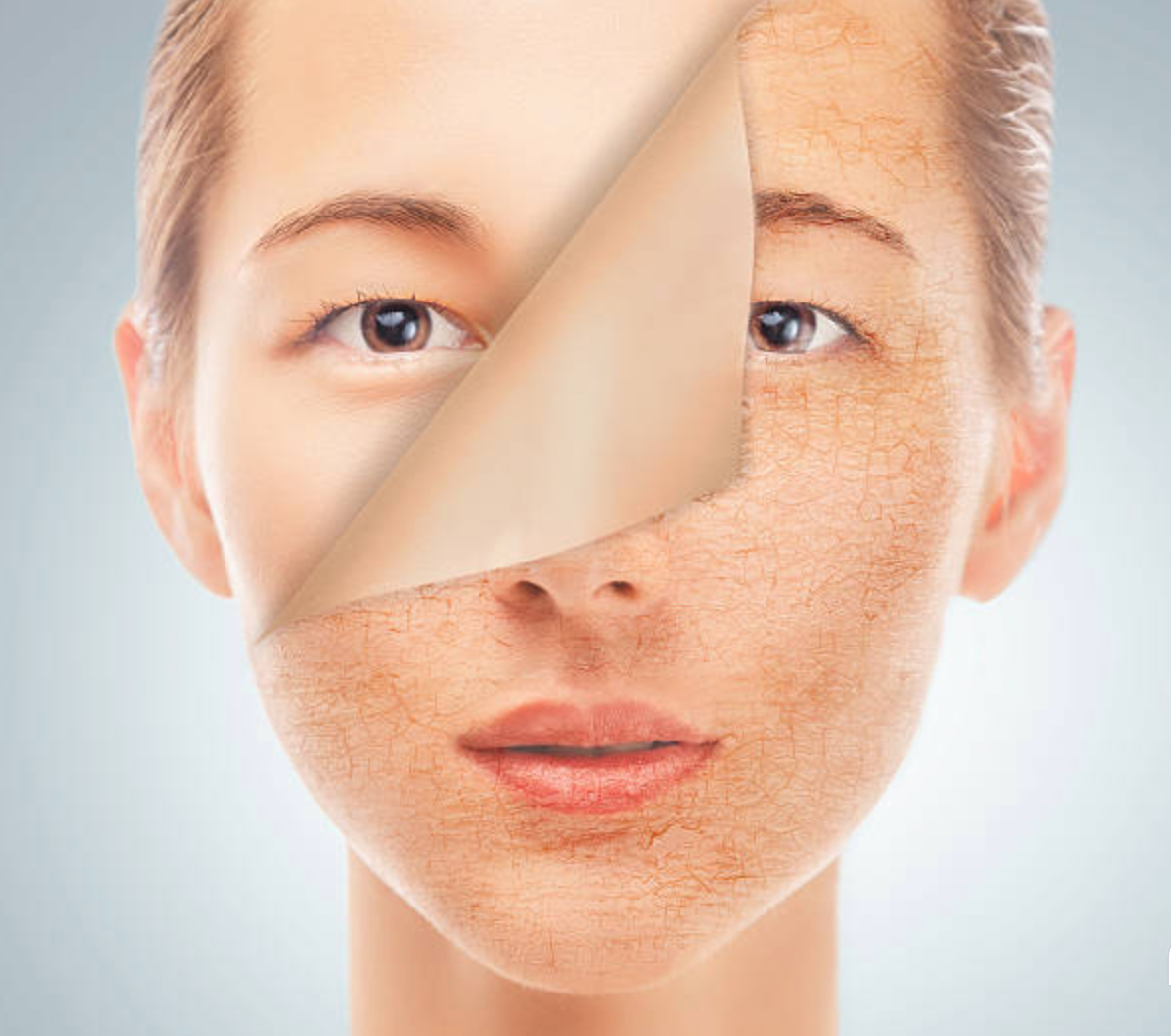
When skin is completely dry, its surface layer, the stratum corneum, is in a contracted, tightly packed state. The corneocytes, which are the flattened dead skin cells that make up the outermost barrier, sit closely together with relatively little space between them. When you apply a rich, occlusive product like a body butter to this surface, it has nowhere to go. It sits on top of the barrier rather than integrating with it. You feel it as greasiness, heaviness, or that frustrating film that never quite disappears.
When skin is slightly damp, not soaking wet, not fully dry, but still holding a light layer of moisture from the shower, something different happens. The stratum corneum is temporarily swollen and pliable. The corneocytes have expanded slightly, creating more space between them. And critically, there is moisture already present on the skin surface that acts as a carrier, drawing the moisturiser inward rather than leaving it on the outside.
The result is a product that absorbs visibly faster, feels lighter on the skin, and delivers its active ingredients, in the case of Pink Prestige, the shea butter's vitamins, the marula oil's fatty acids, the coconut oil's moisturising compounds, directly into the barrier where they can actually do their work. Not sitting on top of it.
This is not a discovery. African women applying shea butter after bathing have understood this intuitively for generations. The traditional practice of applying body butter immediately after washing, before the skin has fully dried, is not a coincidence. It is the most effective way to use the ingredient, and the reason the Pink Prestige product page itself instructs: apply whilst your skin is still a bit damp.
“Apply to damp skin, every single time. This one change makes everything else work better.”
The science behind it — why it works

The skin's outer barrier functions as both a protector and a regulator. Its job is to keep moisture in and irritants out, and it does this through a combination of lipid layers, proteins, and the natural moisturising factor (NMF) that keeps the stratum corneum supple and functional.
When you shower, particularly in warm water, two things happen. First, some of the skin's natural oils and surface lipids are temporarily washed away, which is why skin can feel tight or dry after cleansing. Second, and more importantly for our purposes, the stratum corneum becomes temporarily hydrated, swollen, and more permeable. This window of increased permeability, which lasts only a few minutes before the skin begins to dry and contract again, is the optimal moment to apply a moisturiser.
The science here is well-established. Studies on transepidermal drug delivery have consistently shown that skin permeability is significantly higher in hydrated stratum corneum than in dry stratum corneum. The same mechanism that allows topical medications to penetrate more effectively when applied to damp skin also allows the fatty acids, vitamins, and nourishing compounds in a body butter to penetrate more deeply when applied at the right moment.
There is also a second mechanism at work. When you apply an occlusive product like Pink Prestige to damp skin, it traps the moisture already present on the surface, preventing trans-epidermal water loss (TEWL) in the critical minutes after bathing when the skin is most vulnerable to dehydration. If you wait until the skin is fully dry before applying your moisturiser, that moisture has already evaporated. You are sealing in nothing. If you apply it to damp skin, you are sealing in the water that is right there on the surface. This is the mechanism behind the moisturising effect that lasts for hours rather than wearing off by mid-morning.
Other reasons your moisturiser might not be absorbing

Timing is the biggest factor for most people, but it is worth knowing the other reasons absorption can feel poor, because sometimes more than one thing is going on.
Dead skin cell build-up.

If the stratum corneum has a significant build-up of dead skin cells, any moisturiser you apply sits on top of that layer rather than reaching the living skin underneath. Gentle exfoliation once or twice a week, our Pineapple Sugar Scrub works beautifully for this, removing the barrier and immediately improving how every product that follows absorbs. If your skin feels rough or bumpy, this is likely contributing to the problem.
Using too much product.

More is not always better with body butters. A generous but not excessive amount, about the size of a large grape for both legs, for example, absorbs far more effectively than a thick layer. If you are applying too much, some will inevitably sit on the surface regardless of when you apply it. The damp skin technique allows you to use less product and get more from it.
Water temperature.

Very hot showers strip the skin's natural oils more aggressively than warm or lukewarm water. They also temporarily disrupt the skin barrier in a way that, paradoxically, can make it less receptive rather than more. The ideal shower temperature for skin is warm but not hot, enough to open the pores and soften the stratum corneum without causing excessive lipid stripping that triggers the skin to tighten and close up immediately afterwards.
The wrong product for your skin type.

This is less common than most people think; the technique issue accounts for the vast majority of cases, but it is worth mentioning. Very oily skin types sometimes find that a whipped body butter like Pink Prestige is richer than they need on areas of the body that are naturally less dry, like the arms or chest. For those areas, Asaké Rose Bath and Body Oil can be a lighter alternative. For the areas that genuinely need richness, heels, elbows, knees, and very dry legs, Pink Prestige applied to damp skin is exactly right.
Synthetic fragrances and fillers block absorption.

Many mainstream body lotions contain high concentrations of water, alcohol, and synthetic ingredients that give a quick sensation of moisture without genuine penetration. This is by design, cheaper to manufacture, pleasant immediate sensation, but little lasting benefit. When customers switch to Pink Prestige from a standard high-street lotion, they sometimes initially find it feels heavier. This is because it is genuinely richer, built around organic shea butter, illipe butter, and marula oil rather than water and emulsifiers. The technique adjustment, damp skin, right amount is the bridge between what they were used to and what the product is designed to deliver.
Exactly how to apply Pink Prestige for maximum absorption

Here is the full technique, step by step. It sounds simple because it is, but the specifics matter.
Step one — finish your shower and turn off the water. Do not stand in the cubicle letting the steam continue to open the pores, but equally, do not rush to the towel.
Step two — pat, do not rub. Take your towel and pat the water off your skin rather than rubbing it dry. Rubbing removes too much moisture and can cause friction on skin that is in a temporarily sensitive state after bathing. Pat until the skin is no longer dripping but still clearly damp to the touch; there should be a visible sheen of moisture on the surface.
Step three — apply Pink Prestige immediately. Do not get dressed first. Do not apply deodorant first. Do not walk to the other room to get your phone. Apply your body butter within two to three minutes of stepping out of the shower, while the skin is still in that window of heightened permeability. Take a generous but not excessive amount, roughly a grape-sized portion per body section, and massage it in using upward strokes.
Step four — massage, do not smear. Take thirty seconds to actually work the butter into the skin using circular massage motions. This generates a small amount of heat through friction, which temporarily increases circulation and opens the skin slightly further. It also distributes the product more evenly and helps it integrate with the skin surface rather than sitting on top of it. This is the step most people skip entirely.
Step five — give it sixty seconds. Before getting dressed, give the product sixty seconds to absorb. By this point, applied correctly to damp skin with proper massage, a whipped body butter like Pink Prestige should have sunk in almost completely. Your skin should feel nourished, soft, and slightly dewy, not greasy, not tacky. If it still feels greasy, you used too much.
One of our customers bought Pink Prestige on a trip to Japan, used it throughout the hot weather, and said it kept her skin hydrated all day through the heat, and the bottle lasted over a month. Another said she used to have rough, dry, cracked heels, and nothing seemed to work properly until she started using Pink Prestige. Both results are almost certainly a combination of the product's quality and the application technique. The shea butter's compounds have genuine skin-repairing properties, but they can only deliver those results when the application method allows them to reach the skin properly.
The same principle applies to your face

Everything described above applies equally to facial skincare, including Tikiti Luxe Facial Oil. Apply it to slightly damp skin after cleansing with African Black Soap, while the skin still holds a light layer of moisture from rinsing. The watermelon seed oil, rosehip, and sea buckthorn in the formula absorb visibly faster on damp facial skin than on dry facial skin and the antioxidants and fatty acids penetrate to the depth where they can actually support the skin barrier rather than sitting superficially.
The damp skin technique is not a separate tip for facial oil; it is the same principle applied consistently throughout the routine. Cleanse, leave slightly damp, apply oil immediately. Shower, pat dry, and apply body butter immediately. Timing is the consistent thread, whether you are treating your face or your feet.
Why does this matter more in certain seasons?

The damp skin technique is beneficial year-round, but it becomes critical in autumn and winter and especially relevant in the UK, where central heating strips moisture from indoor air almost constantly from October through to April.
In cold or low-humidity environments, skin loses moisture through trans-epidermal water loss at a faster rate than in warm or humid conditions. The window between stepping out of the shower and the skin beginning to dehydrate again is shorter. This means the timing window for applying your body butter is tighter in winter, which is another reason the habit of applying immediately, without the delay of drying off completely, matters so much more during the colder months.
Central heating is particularly brutal because it creates a very dry indoor environment that continuously draws moisture from the skin. If you are applying Pink Prestige in a centrally heated bathroom fifteen minutes after your shower, to skin that has been sitting in warm, dry air for a quarter of an hour, you are fighting an uphill battle. The moisture you are trying to seal in has largely already left. Apply within two to three minutes, and you are sealing in what the shower provided. Wait longer, and you are working with much less.
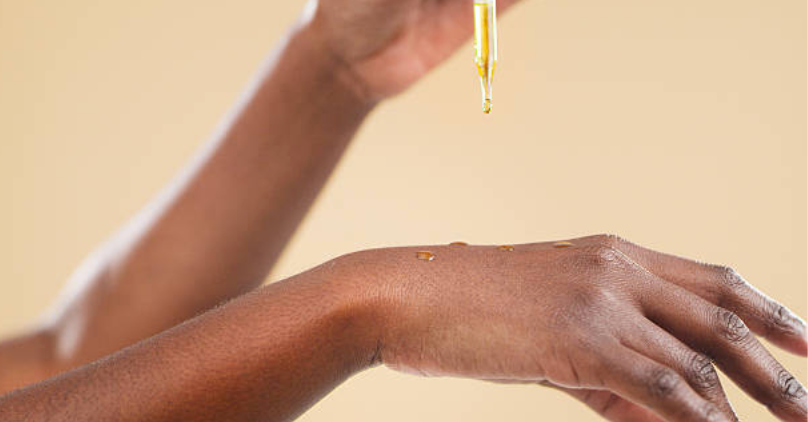
Some customers choose to apply Asaké Rose Bath and Body Oil in the shower itself, a few drops onto wet skin, massaged in, before rinsing or simply patting dry. This is an effective alternative technique for maximum hydration retention, particularly in winter. The oil and water combine on the skin surface, and as the excess water is patted away, the oil remains distributed across the skin. For very dry or eczema-prone skin in the winter months, layering oil in the shower, Pink Prestige immediately after stepping out, is the most intensive hydration routine available without prescription products.
“Heels, elbows, knees, apply damp, massage in, give it sixty seconds. Done. Everything else is the same routine you already have.”
The areas that need the most attention — and why

The damp skin technique delivers its biggest visible results on the areas of the body that are most prone to dryness, ashiness, and poor absorption. These are the areas where the stratum corneum is thickest, where skin cell build-up is most common, and where the difference between applying correctly and applying incorrectly is most obvious.
Heels and feet. The skin on the heels is some of the thickest on the body. Applying body butter to cracked, dry heels after a shower, to damp skin, delivers a fundamentally different result from applying it to heels that have been dry for hours. The temporary swelling of the stratum corneum from the shower water creates the absorption window that allows the shea and marula to reach the deeper, drier layers where the cracking originates. Several Zawadi customers specifically mention their heels transforming with Pink Prestige; this is the mechanism.
Elbows and knees. Thick skin, constant friction, prone to hyperpigmentation and roughness. Applying to damp skin after exfoliating these areas once a week produces noticeably faster improvement in texture and tone than moisturising alone.
Lower legs. The shins in particular have very few sebaceous glands compared to other areas of the body, meaning the skin produces very little natural oil. This makes them chronically dry and prone to that patchy, ashy appearance on darker skin tones. Damp-skin application on the lower legs is where the visual difference is often most immediate and dramatic.
Neck and décolletage. As discussed in our anti-ageing post, these areas age as quickly as the face but get a fraction of the attention. Applying Pink Prestige to the neck and chest immediately after showering, while damp, takes fifteen extra seconds and makes a cumulative difference over months and years that no retroactive treatment can replicate.
Frequently Asked Questions
Q: How damp should my skin be when I apply body butter?
A: Not dripping wet, that dilutes the product and prevents proper distribution. Not fully dry — that closes the absorption window. The ideal is skin that has been patted (not rubbed) after the shower so it is no longer dripping but still has a visible, light sheen of moisture on the surface. If you run your finger along your arm and it feels slightly cool and moist to the touch, that is the right moment.
Q: Will applying body butter to damp skin make it feel greasy?
A: The opposite. Applied to damp skin with proper massage technique, Pink Prestige should absorb noticeably faster and leave less greasy residue than when applied to dry skin. The moisture on the skin surface acts as a carrier, drawing the butter in rather than letting it sit on top. If it still feels greasy after sixty seconds, you are using too much product; reduce the amount rather than changing the timing.
Q: Can I apply Pink Prestige to my face using the same damp skin technique?
A: For the face, Tikiti Luxe Facial Oil is the better choice. Pink Prestige is formulated for body skin and is too rich for daily facial use on most skin types. But the damp skin technique absolutely applies to Tikiti Luxe. Apply three to four drops to slightly damp facial skin after cleansing, press in gently, and it absorbs in under sixty seconds with no greasy residue.
Q: I have very oily skin on my body — should I still use body butter?
A: Oily skin on the body is much less common than on the face, and different areas of your body have different needs. The lower legs and feet almost always need more moisture than they produce naturally, regardless of facial skin type. Apply Pink Prestige specifically to the dry areas, heels, shins, elbows, and knees, and use a lighter touch on areas that do not feel dry. The damp skin technique makes it easier to apply less product more effectively, so you are not over-moisturising areas that do not need it.
Q: My Pink Prestige melted in warm weather — is it still good?
A: Yes, completely. Melting is a natural and expected behaviour of products made with real, unrefined plant butters and oils that are sensitive to heat. It does not affect the quality or effectiveness of the product at all. Pop it in the fridge for a while to restore its whipped texture. This is actually a reassuring quality signal; it means there are no synthetic hardeners or stabilisers in the formula that would prevent it from behaving like the natural product it is.
Q: Should I exfoliate before applying Pink Prestige?
A: Exfoliating once or twice a week before moisturising, particularly on rough areas like heels, elbows, and knees, significantly improves absorption by removing the build-up of dead skin cells that can act as a barrier between the product and the living skin underneath. Our Pineapple Sugar Scrub is specifically formulated for this. On the days you do not exfoliate, the damp skin technique alone delivers excellent results.
Shop the Products Mentioned in This Post
Related Reading
- How to Prevent Wrinkles Naturally: The African Botanical Approach to Skin That Ages Well
- Can You Put Shea Butter on Your Face? (What You Should Use Instead)
- Shea Butter for Hyperpigmentation: How Vitamins A and E Fade Dark Spots Naturally
-
What Order to Apply Natural Skincare Products: The Simple 3-Step African Routine
Still finding your moisturiser sits on your skin no matter what you try? Leave a comment below with what you are using and how you are applying it — we will help you figure out exactly where the issue is.