
New to Zawadi Naturals? Here's Where to Start, Based on Your Skin

Maybe you found us through a TikTok video, a mention in Vogue or John Lewis, or a friend who swears by the black soap. Whatever brought you here, a full product catalogue can be a lot to take in on a first visit. This guide skips the browsing and gets you straight to the right starting point, based on what your skin actually needs.
What Makes Zawadi Different, Briefly

Zawadi Naturals was founded after a move from Nigeria to London, when hard water and a daughter's eczema made most mainstream products unworkable. Every formula is made in a GMP-certified UK lab and externally safety-assessed, which means the African botanical ingredients at the centre of each product- shea, baobab, plantain, black soap- are handled with the same rigour as any clinical skincare brand, not folk remedy guesswork. The brand has been featured in Vogue, John Lewis, and Wolf+Badger, but the actual test is simpler: does it work on skin that's already been let down by harsher products? That's who most of this range was built for.
You don't need to understand the whole catalogue to get started. You need to know what's actually bothering your skin right now.
Start Here If Your Skin Is Dry or Flaky

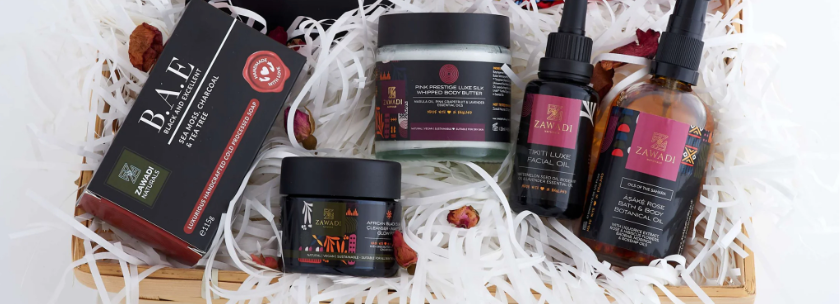
If tightness, flaking, or ashiness is the main complaint, start with a rich, unrefined butter rather than a lightweight lotion. The Pink Prestige Whipped Body Butter (unrefined shea, marula, and illipe butter) is the most straightforward entry point, and the damp skin technique, applying it within two to three minutes of showering, makes a noticeable difference from the first use. For fragrance-free skin, Truth Luxe Silk Body Butter covers the same ground without added scent.
- Start with: Pink Prestige Whipped Body Butter, or Truth Luxe Silk Body Butter if fragrance-free is a priority.
- Add later: Plantain Miracle Multi-Use Salve for particularly stubborn dry patches, elbows, knees, and heels.
Start Here If You Have Hyperpigmentation or Uneven Tone

For dark spots, post-acne marks, or general unevenness, niacinamide is the gentlest evidence-backed starting point, since it works by limiting melanin transfer rather than aggressively stripping pigment. The Divine Cocoon Vitamin B3 Facial Milk is built specifically around this. If tone is a concern across a broader area, The Glow & Flow Set bundles a fuller routine for hyperpigmentation and uneven skin tone into one starting point rather than requiring several separate purchases.
- Start with: Divine Cocoon Vitamin B3 Facial Milk for a single product, or The Glow & Flow Set for a complete routine.
- Add later: Phenomenal Turmeric, Camwood Beauty Bar for a cleansing step that also supports tone.
Start Here If You Have Eczema or Very Reactive Skin

If your skin reacts to fragrance, stings easily, or has a history of eczema, start with fragrance-free, essential-oil-free products without exception. The Eczema Care Bundle was put together specifically for this purpose, and the Plantain Miracle Multi-Use Salve Unscented is a safe, standalone option if you'd rather try one product before committing to a full bundle.
- Start with: Eczema Care Bundle for a complete routine, or Plantain Miracle Multi-Use Salve Unscented alone.
- Avoid initially: fragranced products across the range until you know how your skin responds to the unscented options.
Start Here If You Have Oily or Breakout-Prone Skin

Oily skin often gets steered away from oils and cleansing bars entirely, which usually backfires, since stripping natural oil tends to trigger more oil production, not less. Authentic African Black Soap is a sensible starting cleanser, and the Tikiti Luxe Nutrient Rich Glow & Repair Facial Oil is genuinely appropriate here too. Its watermelon seed oil has a comedogenic rating of 0 to 1, and over 60% linoleic acid content, and acne-prone sebum tends to be linoleic-acid deficient, so a linoleic-rich oil corrects that balance rather than adding to congestion.
- Start with: Authentic African Black Soap as a cleanser.
- Add later: Tikiti Luxe Nutrient Rich Glow & Repair Facial Oil, applied sparingly, once your skin has adjusted to a gentler cleanse.
Start Here If You Want Hair and Scalp Support

If thinning, breakage, or a dry scalp is the priority rather than facial skincare, the Mizizi (Roots) Hair Revival Oil is the single product to start with. Its blend of batana, chebe, rosemary, pumpkin seed, peppermint, and more is built to cover both scalp support and strand conditioning in one bottle rather than requiring several separate hair oils.
- Start with: Mizizi (Roots) Hair Revival Oil.
Not Sure Which One Fits? Try Before You Commit

If more than one of the above applies, or you'd simply rather sample the range before settling on a full-size product, a few options exist specifically for this:
- Radiance Trial Treasures (Travel Essentials): a low-commitment way to try several products in travel size before buying full-size.
- Zawadi Everyday Essentials: a practical bundle covering the core basics without having to choose between individual products.
- Oils of the Sahara: pairs Tikiti Luxe and Asake Rose together for anyone deciding between a facial oil and a body oil rather than one or the other.
- Online Facial Consultation: a genuinely useful option if none of the categories above feel like a clean fit for your skin; a real person reviewing your specific concern beats guessing from a product list.
If You Have More Than One Concern at Once
Very few people have exactly one skin issue, and it's worth having a sensible approach rather than trying to solve everything simultaneously in week one.
- Dry skin plus hyperpigmentation: start with the body butter for comfort and barrier support, then introduce Divine Cocoon on the face after one to two weeks, rather than layering both a rich butter and an active tone treatment on day one.
- Reactive skin plus dryness: stay fragrance-free across the board; Truth Luxe Silk Body Butter and Plantain Miracle Salve Unscented can be used together safely since both are formulated for exactly this combination.
- Oily skin plus occasional dry patches: cleanse with Authentic African Black Soap across the whole face, but spot-apply a small amount of Tikiti Luxe only to genuinely dry areas rather than the entire face.
- Hyperpigmentation plus sensitivity: Divine Cocoon is a reasonable starting point even for reactive skin, since niacinamide is generally well tolerated, but patch test first as you would with any new active ingredient.
The general principle: address the most disruptive concern first, give it two to three weeks to settle in, then add the next product rather than starting several new things on the same day. This makes it far easier to tell what's actually working, and easier to identify quickly if any single product doesn't agree with your skin.
What the First 30 Days Should Look Like

Knowing what to expect early on prevents both premature disappointment and premature over-buying.
- Days 1 to 7: focus on how the product feels, absorption, comfort, and any immediate reaction. This is not yet the window for judging visible results.
- Days 7 to 14: skin typically starts adjusting to a new routine; some initial purging or adjustment is possible if you've switched from a very different previous routine, particularly a heavily synthetic one.
- Days 14 to 28: this is when most people start to notice a genuine difference, softer texture, less tightness, slightly more even tone, provided the product has been used consistently.
- Day 28 onward: a full skin cell cycle has passed, and this is a fair point to properly judge whether a product is right for you, rather than basing that decision on the first week or two.
If irritation, breakouts, or discomfort appear rather than gradual improvement, that's different from normal adjustment and worth stopping the product to reassess, ideally with the Online Facial Consultation if you're unsure which of the two is happening.
Building Toward a Full Routine Over Time
None of the above requires buying the whole catalogue at once, and doing so is rarely the right approach anyway. A sensible way to build toward a complete routine looks like this over roughly two to three months:
- Month 1: one core product addressing your primary concern, used consistently and nothing else changed.
- Month 2: a complementary product, a cleanser to pair with a moisturiser, or a facial oil to pair with a body butter, introduced once the first product is clearly working.
- Month 3 onward: refine and add targeted products, a bundle, a specific tone treatment, a hair product, based on what you've learned about how your skin actually responds.
This slower build costs a little more patience upfront but avoids the common first-time mistake of buying five products at once, reacting to one of them, and not being able to tell which product caused it.
Frequently Asked Questions
I have more than one concern: dry skin and hyperpigmentation. Where should I actually start?
Start with whichever concern bothers you most day to day, since trying to solve everything in one order usually leads to product overload. Most people find dryness and barrier support (a rich butter) is the more comfortable starting point, with tone-focused products like Divine Cocoon layered in a few weeks later once your skin has adjusted.
Are Zawadi products actually safe, or is "natural" just a marketing term here?
Every formula is made in a GMP-certified UK lab and externally safety-assessed, the same standard expected of clinical skincare, not an unregulated home-brew claim. "Natural" here refers to the African botanical ingredient sourcing, not a lack of formulation rigour.
I have very sensitive skin. Is there a genuinely safe way to try the range?
Yes, start with the unscented, essential-oil-free options specifically, Truth Luxe Silk Body Butter or Plantain Miracle Multi-Use Salve Unscented, and patch test on a small area first, as you reasonably would with any new product regardless of brand.
Do I need to buy a bundle, or can I just try one product first?
You can absolutely start with a single product. Bundles exist for convenience and value once you know a routine works for you, not as a requirement to get started.
How long before I'll know if a product is actually working for my skin?
Give any new product four to six weeks of consistent use before judging results. Skin cell turnover runs on a 28 to 35 day cycle, so meaningful visual change typically needs at least one full cycle to show up, regardless of how good the formula is.
What if none of these categories quite match what's going on with my skin?
That's exactly what the Online Facial Consultation is for. It's a genuinely useful option when your concern doesn't map neatly onto a single category, since a real assessment beats guessing from a general guide.
Should I buy several products at once to save on shipping, or start with just one?
Starting with one product is the more sensible approach, even if it means a second order later. Introducing several new products simultaneously makes it much harder to identify which one is actually working, or which one is responsible if your skin reacts badly to something.
I switched from a routine full of synthetic actives. Should I expect an adjustment period?
Some adjustment is normal, particularly in the first one to two weeks, as skin recalibrates after synthetic actives or heavy fragrance. This is different from ongoing irritation; mild and settling within two weeks is a reasonable adjustment; anything worsening or persisting is worth stopping and reassessing.
Shop the Recommended Starting Points
- Pink Prestige Whipped Body Butter
- Divine Cocoon Vitamin B3 Facial Milk
- Eczema Care Bundle
- Radiance Trial Treasures (Travel Essentials)
Still not sure where you fit? Tell us your main concern in the comments, and we'll point you in the right direction. We read every one.